Last updated August 20, 2026 · NHG HOME · CA contractor license B-General #1104364
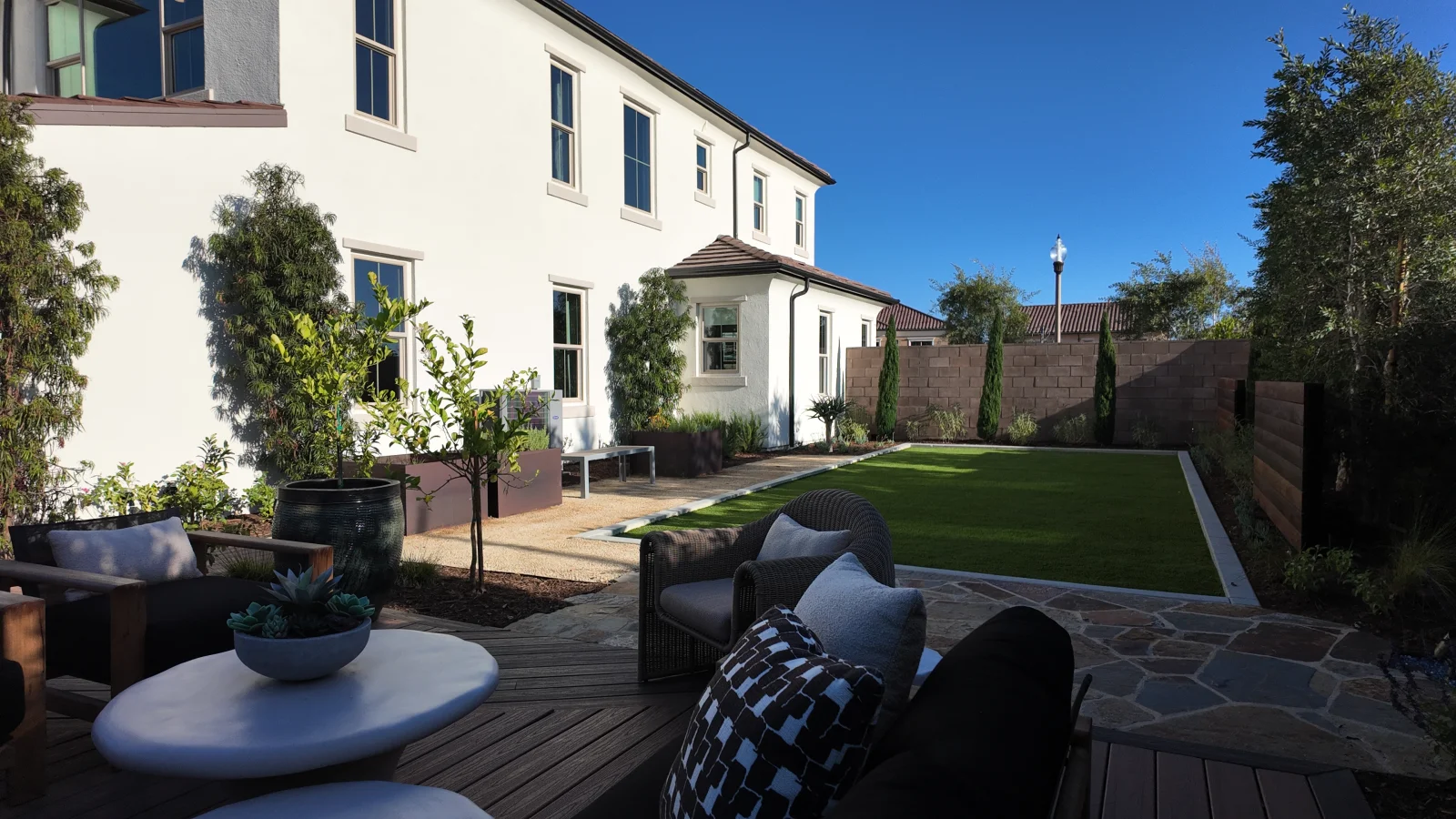
Planning a landscape project in Orange County starts with one question: how much will it cost? Whether you are envisioning a simple patio refresh or a full backyard transformation with an outdoor kitchen and pool, understanding local pricing helps you budget with confidence and avoid surprises. This guide breaks down real 2026 costs for landscape design and construction across Orange County so you can plan smarter.
Design Fee Breakdown
Before a single shovel breaks ground, you need a design plan. Landscape design fees in Orange County vary based on the scope of work and how the designer structures their services.
Design-only packages from independent landscape architects or designers typically range from $2,000 to $8,000. This covers site analysis, concept plans, planting plans, and construction documents. The price scales with lot size and complexity — a 1,500-square-foot patio plan costs less than a full property master plan with grading, drainage, and lighting layouts.
Full design-build firms like NHG HOME often include design fees within the overall project contract. When you commit to design and construction with the same company, the design fee is typically absorbed into the build cost, saving you 10–20% compared to hiring a designer and contractor separately. This approach also eliminates the communication gaps that occur when separate teams handle design and construction.
3D rendering packages add $500 to $1,500 on top of base design fees. These photorealistic visualizations let you see exactly how your finished project will look before construction begins — including materials, lighting, and plantings rendered at different times of day. At NHG HOME, 3D renderings are included in every design package.
Landscape design fee as a percentage of construction cost
When a landscape architect bills on a percentage basis, the design fee in Orange County typically runs 8–15% of the construction budget for full service — concept through construction documents and site visits during the build. Concept-only work usually falls at 5–8%, while complex hillside or coastal-permit projects can reach 15–20%. On a $120,000 backyard that is roughly $10,000–$18,000 in design fees. Flat-fee tiers like NHG HOME's $1,350 / $2,800 / $5,200+ packages come in well under the percentage model for most projects below $150,000, and design-build firms generally credit the design fee back when you build with them.
Landscape architecture cost per square foot
Design documents alone average $1–$3 per square foot of designed area in Orange County. Built cost is where the square footage really matters: planting-led yards run about $15–$30 per square foot installed, a full backyard with hardscape, planting, lighting and irrigation lands at $25–$75, and outdoor-living builds with a kitchen, shade structure, fire feature or pool deck run $75–$150+. A typical 2,000-square-foot Orange County backyard therefore budgets $50,000–$150,000 built, which is exactly the range in the project-type table below.
| Scope | Typical Orange County cost / sq ft |
|---|---|
| Design documents only | $1–$3 |
| Planting-led yard (irrigation, lawn alternatives, beds) | $15–$30 |
| Full backyard (hardscape + planting + lighting) | $25–$75 |
| Outdoor-living build (kitchen, shade, fire, pool deck) | $75–$150+ |
Master plan vs. consultation vs. 3D rendering: what each costs
A stand-alone design consultation (one to two hours on site, verbal recommendations, no drawings) costs $150–$500 from an independent designer; design-build firms including NHG HOME offer the first on-site consultation free. A concept or design plan — scaled layout, material palette and plant list for one area — runs $1,350–$3,000. A full landscape master plan covering the whole property with grading and drainage, lighting, irrigation and a permit-ready construction set runs $2,800–$8,000, with estate-scale plans starting around $5,200. 3D renderings are a $500–$1,500 add-on elsewhere and included in every NHG HOME design package.
Cost by Project Type
Landscape construction costs in Orange County depend heavily on the type of project. Here are typical price ranges for 2025 and 2026.
| Project Type | Cost Range |
|---|---|
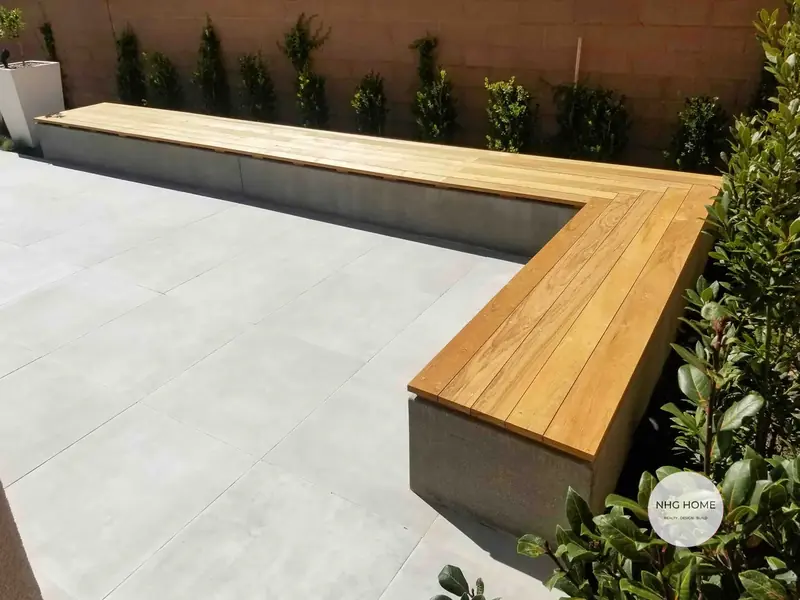
| Basic patio / hardscape | $15,000 – $40,000 |
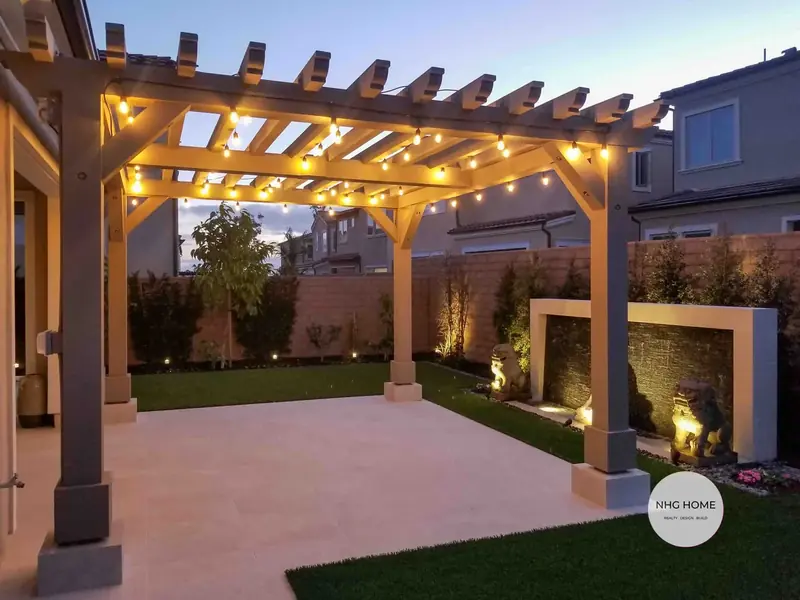
| Pergola / shade structure | $8,000 – $25,000 |
| Fire pit / fireplace | $5,000 – $20,000 |
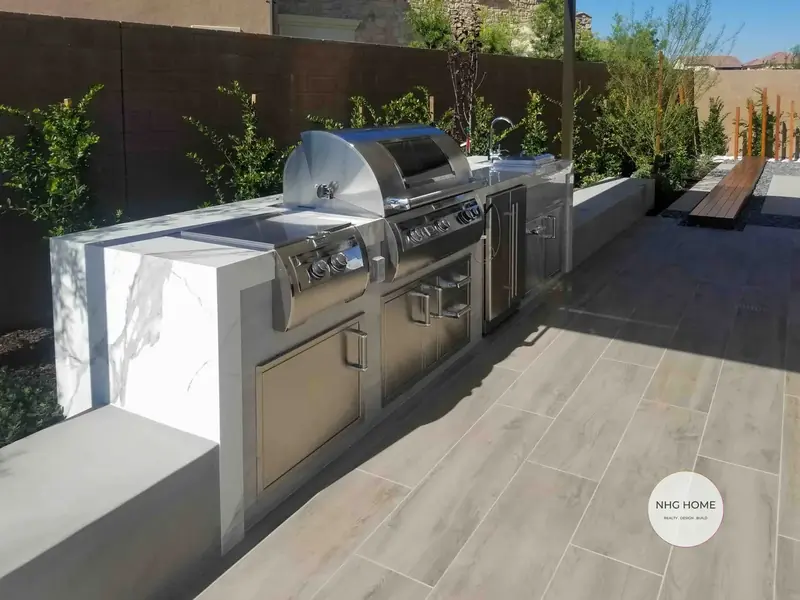
| Outdoor kitchen addition | $25,000 – $75,000 |
| Complete backyard remodel | $50,000 – $150,000+ |
| Pool + surrounding landscape | $80,000 – $200,000+ |
* Prices reflect Orange County averages as of April 2026. Actual costs depend on lot size, material selections, site conditions, and project complexity.
Factors That Affect Cost
No two landscape projects are identical. Several site-specific and design-specific factors will push your final number higher or lower than the ranges above.
Lot size and access. Larger properties require more material and labor. Tight side-yard access or hillside lots add equipment and logistics costs that can increase the total by 15–25%.
Material choices. Natural stone (travertine, flagstone, bluestone) costs two to three times more than concrete pavers. Porcelain tile, premium composite decking, and imported materials will push costs toward the higher end of each range.
Grading and drainage. If your lot slopes, has poor drainage, or requires retaining walls, expect $3,000 to $15,000 in additional site prep costs. Proper drainage is non-negotiable in Southern California — water damage claims from poor grading far exceed the cost of doing it right.
HOA requirements and permits. Many Orange County communities require architectural review committee approval, which adds 2–6 weeks to your timeline and $500–$2,000 in permit and submission fees. City building permits for structures like pergolas, outdoor kitchens, and retaining walls over four feet add another $500–$3,000.
Existing conditions. Demolition and removal of old concrete, removing mature trees, or rerouting irrigation lines are common costs that homeowners overlook. Budget $2,000 to $8,000 for demolition depending on what needs to come out.
How to Budget Wisely
Smart budgeting separates homeowners who love their finished project from those who feel blindsided by costs. Follow these guidelines to stay in control.
Get three detailed estimates. Not ballpark numbers — itemized proposals that break out design, materials, labor, permits, and contingency. Comparing line items reveals where companies differ and where you can negotiate.
Keep a 10–15% contingency. Underground surprises (buried concrete, irrigation lines, root systems) show up on nearly every project. A $100,000 project should have $10,000–$15,000 set aside for the unexpected.
Phase your project if needed. You do not have to build everything at once. A phased approach lets you spread costs across seasons — install the patio and hardscape this year, add the outdoor kitchen next year, and finish with landscaping and lighting. A good design-build firm will create a master plan that accounts for phasing from the start.
Choose design-build to save money. Hiring a separate landscape architect and then bidding out the construction typically costs 15–25% more than a design-build contract. The design-build model eliminates redesign costs, reduces change orders, and keeps the project on a single timeline.
Why Orange County Costs More
If you have compared prices with friends in the Inland Empire or other parts of California, you have probably noticed Orange County runs 20–40% higher. Here is why.
Higher labor costs. Skilled tradespeople in Orange County command premium wages due to the cost of living and high demand for quality contractors. Labor typically accounts for 40–50% of a landscape project, so this has the single largest impact on pricing.
Stricter permitting. Cities like Irvine, Newport Beach, and Laguna Beach have more rigorous plan check processes and building code requirements than most California cities. This translates to longer timelines and higher administrative costs.
HOA compliance overhead. More than half of Orange County homes sit within HOA-governed communities. The architectural review process adds design documentation, material boards, and revision cycles that do not exist in non-HOA areas.
Design fees are only the first line of the budget. For build-side numbers — what the hardscape, structures, kitchen and planting each cost, and what comes back at resale — see our Orange County backyard remodel cost guide.
Premium material expectations. Orange County homeowners generally expect high-end finishes — natural stone over stamped concrete, built-in grills over portable units, low-voltage LED lighting over string lights. These material choices reflect the region and deliver long-term value, but they do increase the upfront investment.