Last updated August 1, 2026 · NHG HOME · CA contractor license B-General #1104364
An outdoor kitchen is the centerpiece of outdoor living in Orange County. With 280+ days of sunshine and year-round mild weather, your outdoor kitchen isn't a seasonal add-on — it's a genuine extension of your home that sees use 10-12 months a year. But designing a great outdoor kitchen requires more thought than picking out a grill and some counters. Layout, ventilation, weather protection, appliance selection, and integration with your existing backyard all matter enormously. This guide walks you through what makes an outdoor kitchen great — and what mistakes to avoid.
Outdoor Kitchen Layouts: L-Shape, U-Shape, Island, and Straight-Run
The best outdoor kitchen layout depends on your backyard space, how you cook, and how you entertain. Here are the four main layout configurations we build in Orange County, with the strengths and trade-offs of each.
L-Shape Outdoor Kitchen
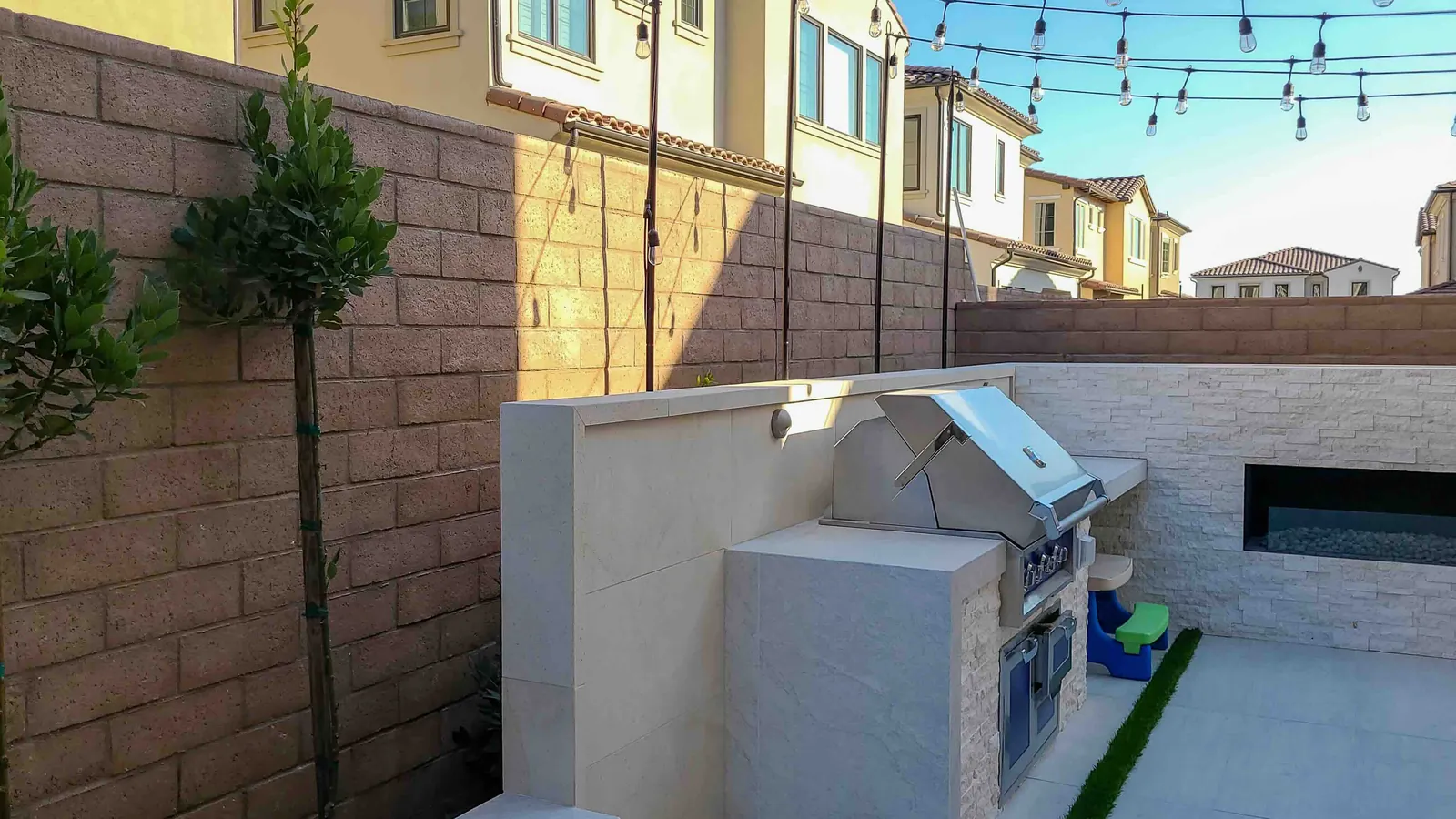
The L-shape is the most versatile outdoor kitchen layout. One leg holds your grill and cooking appliances, the other leg provides prep counter space and a sink. This layout works in virtually any backyard size, provides natural workflow separation between cooking and prep, and keeps the cook close to guests without feeling crowded. L-shape kitchens typically span 8-14 feet on the long side and 4-6 feet on the short side. It's our most common recommendation for Orange County backyards.
U-Shape Outdoor Kitchen
U-shape kitchens wrap around three sides, creating a dedicated cooking zone with maximum storage, counter space, and appliance integration. This layout is ideal for serious cooks who want full functionality — pizza oven, refrigerator, warming drawer, multiple burners — and don't mind dedicating 100+ square feet to the kitchen area. U-shape kitchens work best in larger Orange County backyards with 200+ square feet of hardscape area.
Island Outdoor Kitchen
Island kitchens are freestanding cooking stations with a raised bar on one side for seating. They're perfect for entertaining — the cook faces guests who sit at the bar, creating conversation flow and drawing the party toward the outdoor kitchen. Islands work well when you want the outdoor kitchen to be a social focal point rather than tucked against a wall. Typical sizes run 8-12 feet long.
Straight-Run Outdoor Kitchen
The straight-run is the most compact outdoor kitchen layout — all components in a single line along a wall. It's the lowest-cost option and works great in smaller Orange County backyards where space is limited. You sacrifice some counter and prep space, but you get a functional outdoor cooking setup for less money. Typical length: 6-12 feet.
Essential Appliances (and What You Don't Need)
Outdoor kitchen appliances range from a basic built-in BBQ to a full outdoor kitchen that rivals your indoor setup. Here's what actually earns its place in an Orange County outdoor kitchen.
Must-Have Appliances
- Built-in gas grill (36-42 inch): The foundation. Stainless steel, rotisserie, three or more burners. Budget $1,500-$5,000 for quality brands like Lynx, Fire Magic, Alfresco, or DCS.
- Prep counter space: Minimum 24 inches on either side of the grill, ideally 36+ inches on one side for prep.
- Storage: Doors, drawers, and cabinets for grilling tools, plates, and utensils.
- Outdoor refrigerator (UL-rated for outdoor use): Ensures drinks and cold ingredients stay out of the indoor kitchen. $800-$3,000.
- GFCI outlets: Required by code for outdoor electrical.
Worth It For Serious Cooks
- Pizza oven (gas or wood-fired): Transforms outdoor cooking. $1,500-$8,000 for built-in models. Delivers restaurant-quality pizza at home.
- Side burner: For sauces, sides, and keeping food warm without going inside. $300-$800 built-in.
- Searing station or infrared burner: For restaurant-quality steaks and high-heat cooking.
- Power burner or wok station: For stir-fry and high-BTU cooking outdoors.
- Warming drawer: Keeps plates and food at serving temperature during entertaining.
Often Skipped (and That's OK)
- Outdoor sink: Adds plumbing complexity, cost, and maintenance. Most homeowners end up using the indoor sink anyway. Skip unless you really want it.
- Outdoor dishwasher: Almost never justified. Takes indoor space and gets heavy outdoor use damage.
- Kegerator or beer tap: Fun but specialty. Only worth it if you entertain weekly.
- Ice maker: Nice to have but a cooler works 95% as well at 5% the cost.
Real 2026 Pricing: Outdoor Kitchen Costs in Orange County
Outdoor kitchen pricing has grown more transparent as the category has matured. Here's what Orange County homeowners actually pay in 2026 for complete installed outdoor kitchens:
- Basic BBQ Island ($8,000-$18,000): Concrete block or steel frame, mid-grade stainless grill, stone or tile veneer, basic storage. 6-8 ft long. Good starting point.
- Mid-Range Outdoor Kitchen ($18,000-$40,000): L-shape layout, premium built-in grill, outdoor refrigerator, side burner, quality stone countertops, good storage. 10-14 ft total.
- Premium Outdoor Kitchen ($40,000-$80,000): Full L or U shape, high-end appliances (Lynx/Alfresco/DCS), pizza oven, refrigerator, warming drawer, custom stone, integrated lighting. 14-20 ft.
- Luxury Outdoor Kitchen ($80,000-$200,000+): Estate-level installations with multiple cooking zones, bar seating, integrated pergola cover, imported materials, full appliance suite.
What drives cost? Appliance selection is usually the biggest variable — premium brands like Lynx, DCS, or Kalamazoo cost 2-4x basic options. Countertops also vary widely (basic tile $40-$80/sq ft vs. Neolith or premium stone $120-$250/sq ft). Plumbing for a sink adds $1,500-$5,000. Gas line extensions from the main line add $2,000-$6,000. Electrical for outlets and lighting adds $1,500-$4,000.
Integration With Pergolas and Outdoor Living Spaces
The most successful Orange County outdoor kitchens aren't standalone structures — they're integrated with pergolas, dining areas, fire features, and lounge zones to create a complete outdoor living experience. Planning this integration from the start produces dramatically better results than adding an outdoor kitchen to an existing patio as an afterthought.
Pergola-Covered Outdoor Kitchens
A pergola over your outdoor kitchen protects appliances from UV damage and rain, extends usable hours during hot afternoons and evening entertaining, and provides mounting points for lights, fans, and speakers. Motorized louvered pergolas are particularly effective because they can close completely during rain or intense sun. Plan pergola dimensions to extend 2-3 feet beyond the kitchen on all sides for adequate protection.
Cooking Zone + Dining Zone + Lounge Zone
Great outdoor living spaces organize around three zones: the outdoor kitchen (cooking), the dining area (table and chairs, typically 10-12 feet away), and the lounge zone (soft seating around a fire pit, usually 15-20 feet away). This three-zone layout mirrors how people actually use outdoor spaces — separate but visually connected activities. A single 400-600 square foot hardscape area can accommodate all three comfortably.
Fire Features and Water Features
Fire pits and fireplaces extend outdoor season into cooler months and provide a natural gathering point. Water features add soundscape and visual interest. Integrating these with your outdoor kitchen creates a cohesive outdoor living experience rather than a collection of separate elements. We often design outdoor kitchens that visually anchor one end of a space with a fire feature at the other end.